
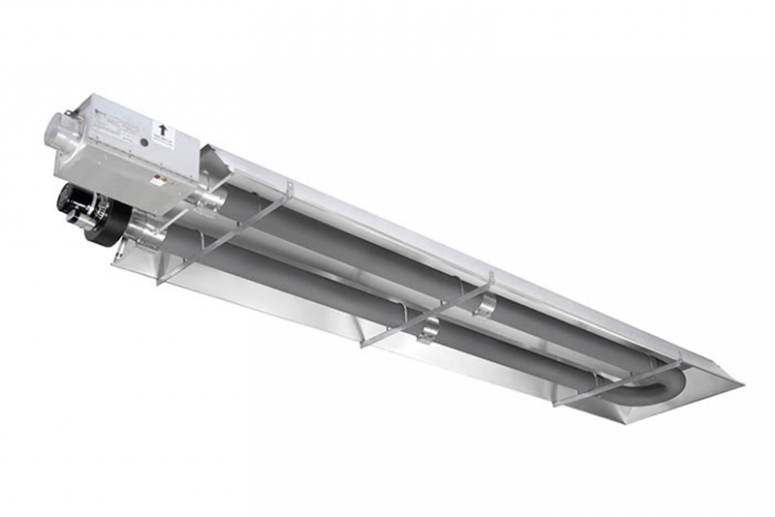
What Is Radiant Heating?
Radiant heating is a heating method that warms people and objects directly rather than heating the surrounding air.
The system emits infrared radiation, which travels through the air until it reaches a surface. When the radiation hits that surface, it is absorbed and converted into heat.
This is the same principle as the warmth you feel from sunlight on a cold day. Even when the air temperature is low, the sun’s rays warm your skin and nearby surfaces.
Because radiant heating focuses on heating objects and people directly, it is far more efficient in buildings with large open spaces or high ceilings.
How Radiant Heating Works
Radiant heating systems typically use infrared heaters or radiant tube heaters mounted on ceilings or walls.
The process works in four simple stages:
The heater generates infrared radiation.
The radiation travels through the air without significantly heating it.
The energy reaches floors, machinery, equipment and people.
Those surfaces absorb the heat and gradually release warmth into the surrounding space.
This method allows heat to be delivered exactly where it is needed, rather than heating the entire volume of air inside a building.
Why Radiant Heating Is Ideal For Warehouses & Industrial Buildings
Large commercial buildings often suffer from heat loss when traditional warm-air systems are used.
Radiant gas or electric heating solves many of these problems.
Efficient in Buildings with High Ceilings
In warehouses or factories with high roofs, warm air naturally rises. This means traditional heating systems waste a large amount of energy heating the roof space rather than the working area.
Radiant heating directs heat downward toward the occupied zone, keeping workers comfortable without wasting energy.
Reduced Heat Loss from Doors
Industrial buildings frequently have roller shutter doors or loading bays that open regularly. When warm air escapes, traditional heating systems must work harder to replace the lost heat.
Radiant heating is less affected by this because it heats surfaces rather than the air itself.
Fast Warm-Up Times
Radiant heaters provide warmth almost immediately after being switched on. This makes them ideal for buildings that do not need to be heated constantly throughout the day.
Lower Energy Consumption
Because radiant systems target specific areas rather than heating the entire air volume, they can significantly reduce energy use in large commercial spaces.
Where can a Radiant Heater be placed?
Radiant heating is widely used across many industries due to its efficiency and reliability.
Typical applications include:
Warehouses
Industrial units
Manufacturing facilities
Workshops and garages
Aircraft hangars
Sports halls
Distribution centres
These types of buildings often struggle to maintain comfortable temperatures using traditional heating methods.
Radiant Heating vs Conventional Heating Systems
The main difference between radiant heating and traditional systems is how heat is delivered.
| Feature | Radiant Heating | Warm Air Heating |
|---|---|---|
| Heating method | Infrared radiation | Heated air circulation |
| Efficiency in large spaces | High | Lower |
| Heat loss | Minimal | High in buildings with tall ceilings |
| Warm-up time | Fast | Slower |
| Performance with open doors | Good | Heat quickly escapes |
For many industrial buildings, radiant heating provides a more efficient and cost-effective heating solution.
Types of Radiant Systems
There are several types of radiant heating systems used in commercial buildings.
Radiant Tube Heaters
These are commonly installed in warehouses and factories. They generate infrared heat through a long metal tube, distributing warmth across large areas.
Ceramic Plaque Heaters
These heaters use ceramic plates to emit intense radiant heat and are often used in industrial or outdoor environments.
Infrared Electric Heaters
Electric infrared heaters are commonly used for spot heating or smaller commercial spaces.
Is Radiant Heating Right for Your Building?
Radiant heating is particularly suitable for buildings that:
Have high ceilings
Lose heat through large doors
Require zoned heating
Have large open floor areas
If your building experiences uneven heating or high energy costs with traditional systems, switching to radiant heating may significantly improve efficiency.
Professional Installation
Choosing the right heating system for a commercial building requires careful planning and expert installation.
A properly designed radiant heating system ensures:
Even heat distribution
Maximum energy efficiency
Reliable performance
Lower operating costs
Working with experienced commercial heating engineers ensures the system is correctly sized and installed for your building.
Need Advice on Radiant or Commercial Heating?
If you’re considering radiant heating for your warehouse, workshop or industrial unit, professional advice can help you choose the most efficient solution. We work with manufacturers such as Spaceray, Powrmatic and Reznor – so you know you are in great hands.
At Swiftheat, our commercial heating specialists install, maintain and service heating systems for businesses across a wide range of industries.
Contact our team today on 0300 124 0114 or through our CONTACT FORM to discuss the best heating system for your building.


